When Four Paws Became Part of the Mission: The USO at RIMPAC 2026
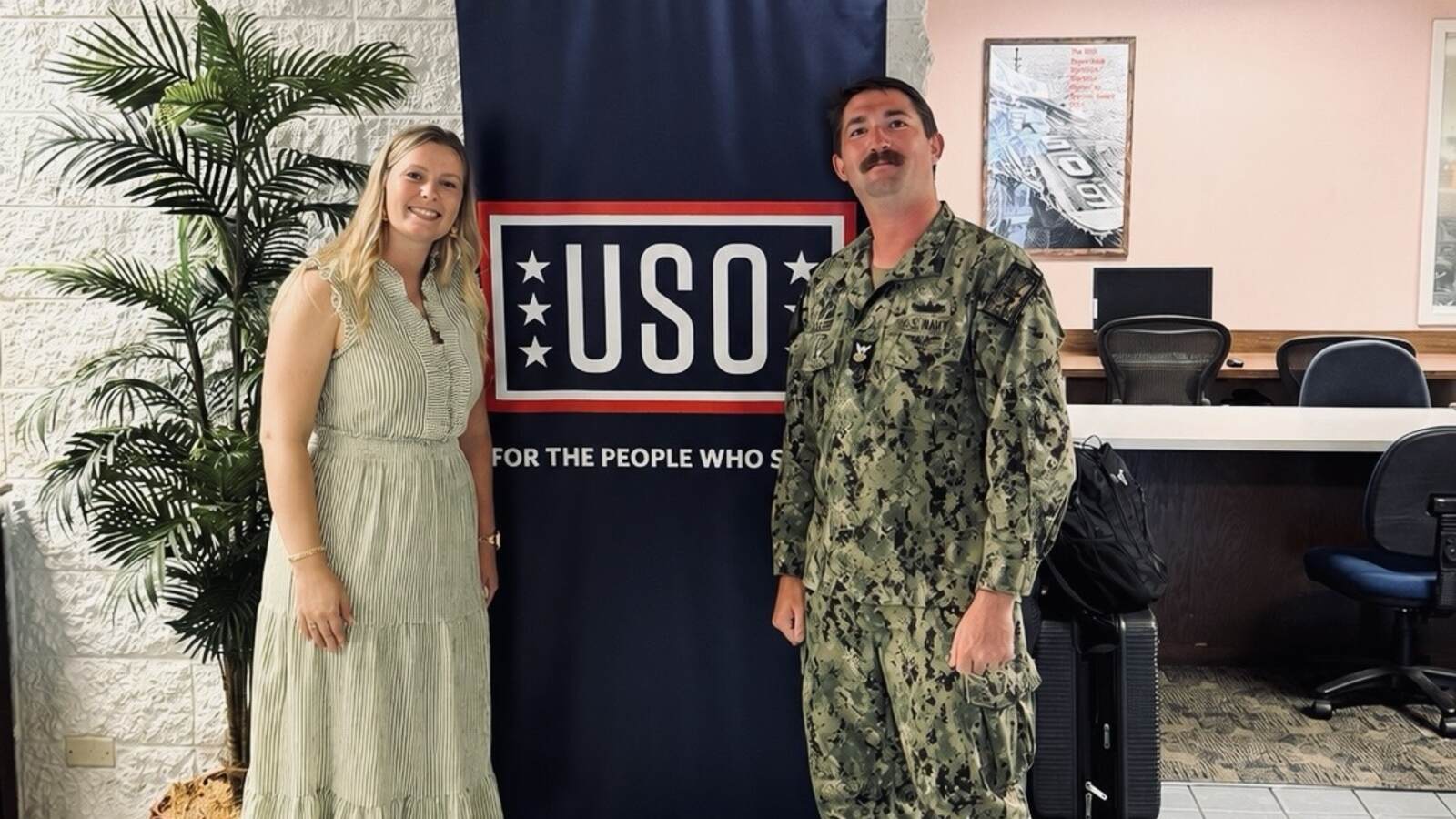
(from left) USO Hawaii Area Operations Specialist Kristine Schou and USO Sasebo Center Operations Coordinator Parker Kalasek
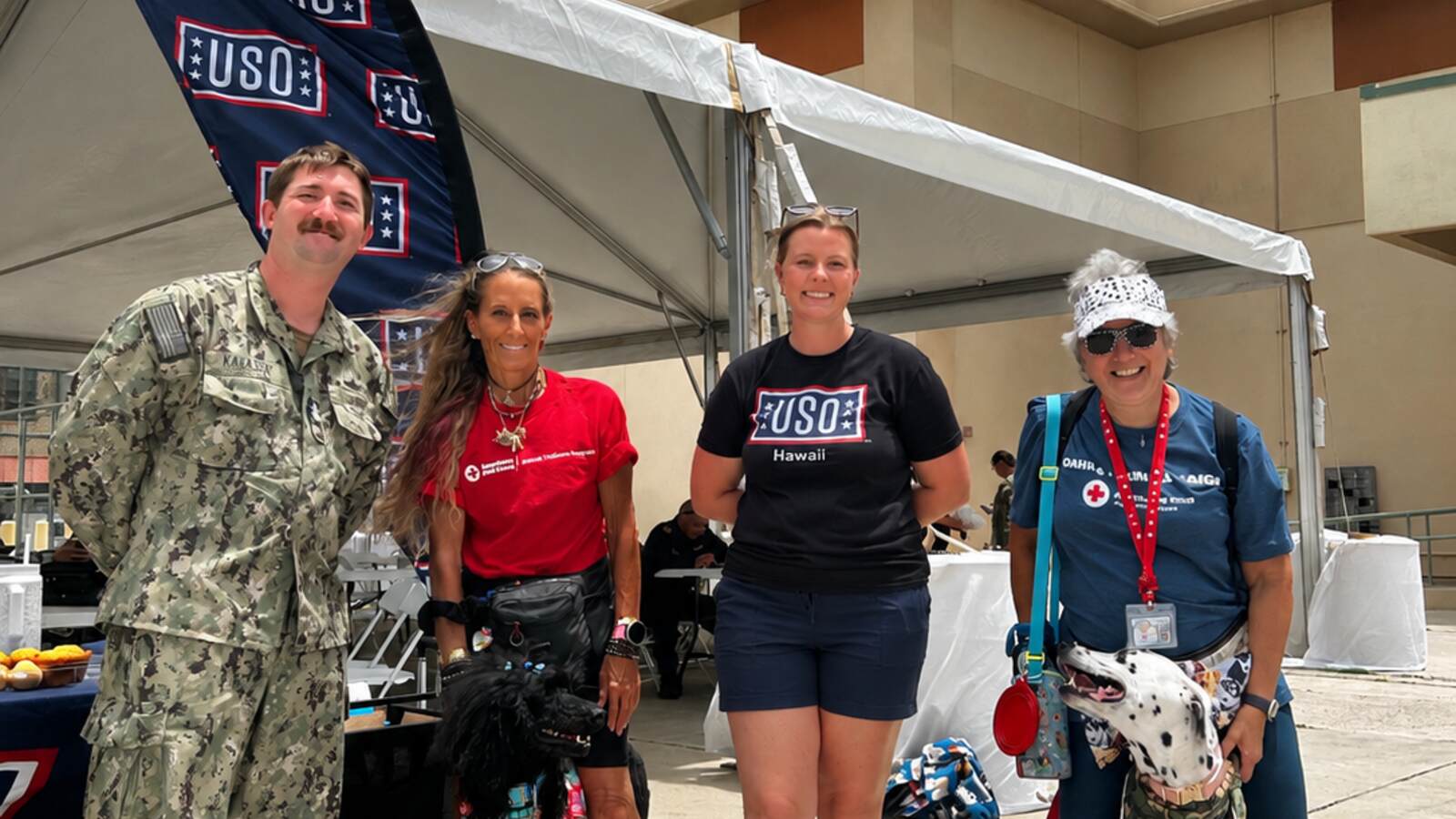
(from left) USO Sasebo Center Operations Coordinator Parker Kalasek, American Red Cross Volunteer Mara and her Therapy dog Makana, USO Hawaii Area Operations Specialist Kristine Schou, and American Red Cross Volunteer Eileen with her therapy dog Lani.
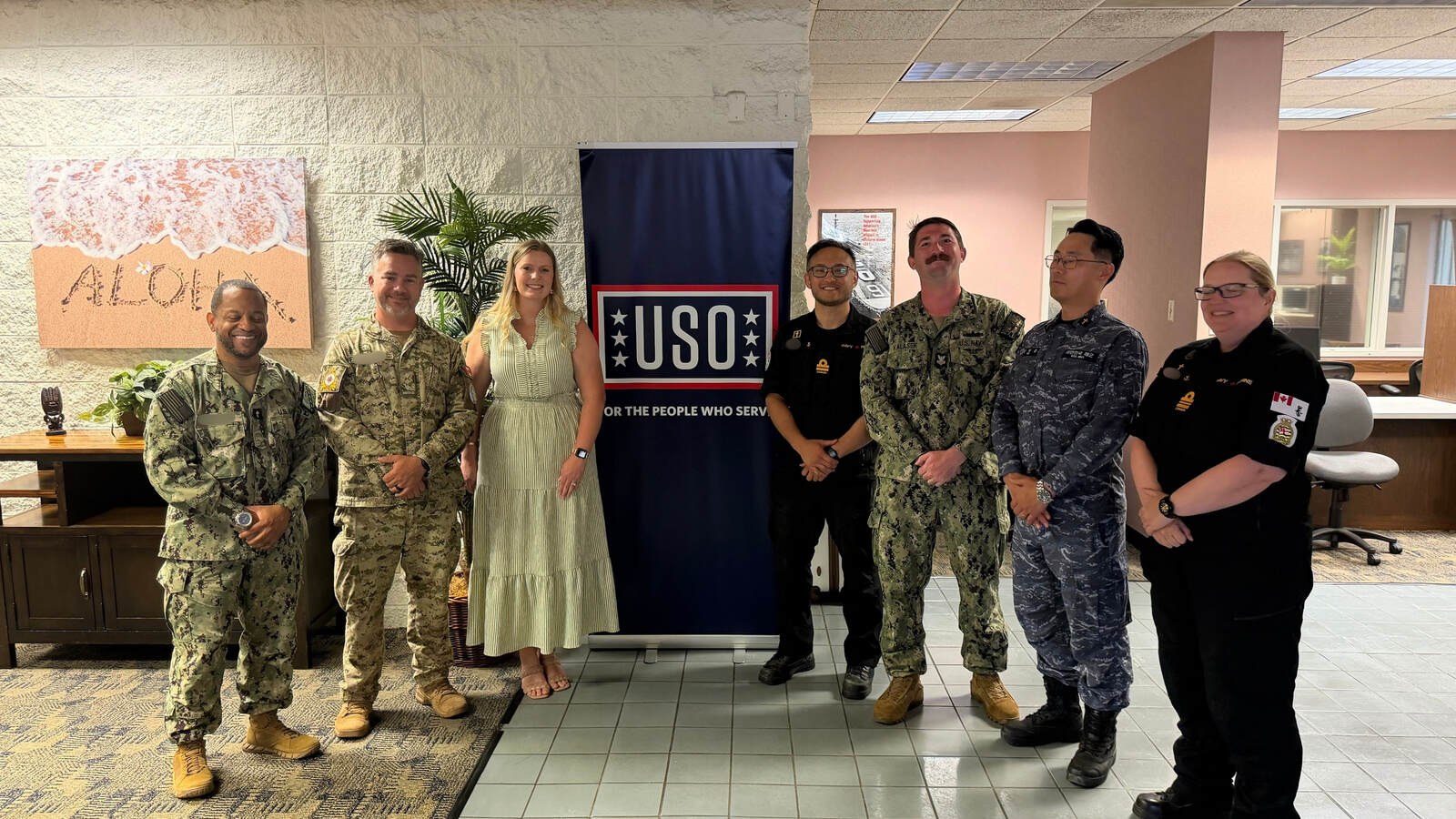
(From Left) U.S Navy Chaplain, Australian Chaplain, USO Hawaii Area Operations Specialist Kristine Schou, Canadian Chaplain, USO Sasebo Center Operations Coordinator Parker Kalasek, Republic Of Korea Chaplain, and a Canadian Chaplain at USO Pearl Harbor-Hickam
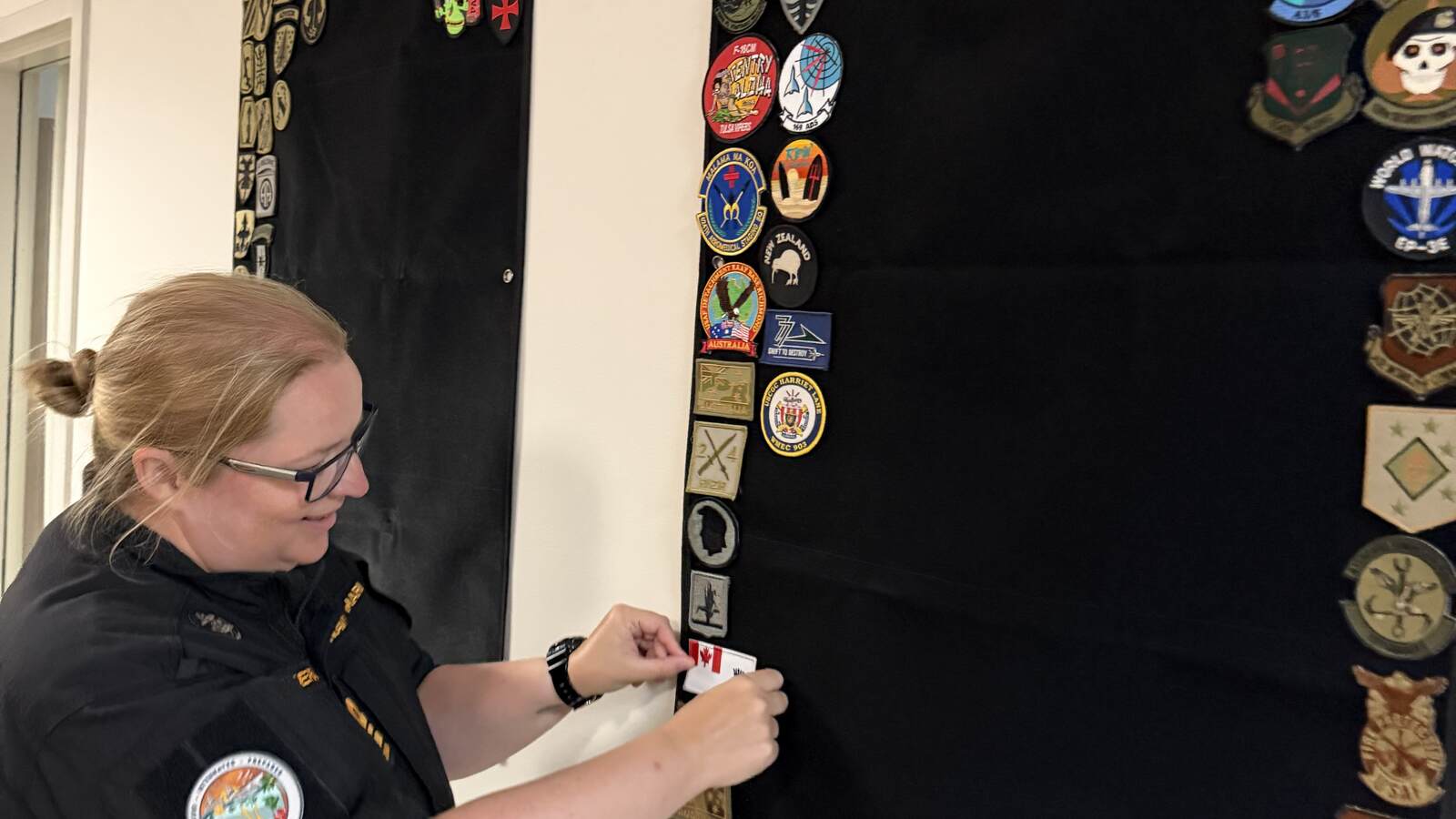
Canadian Navy member adding their patch to our wall of patches at USO Pearl Harbor-Hickam
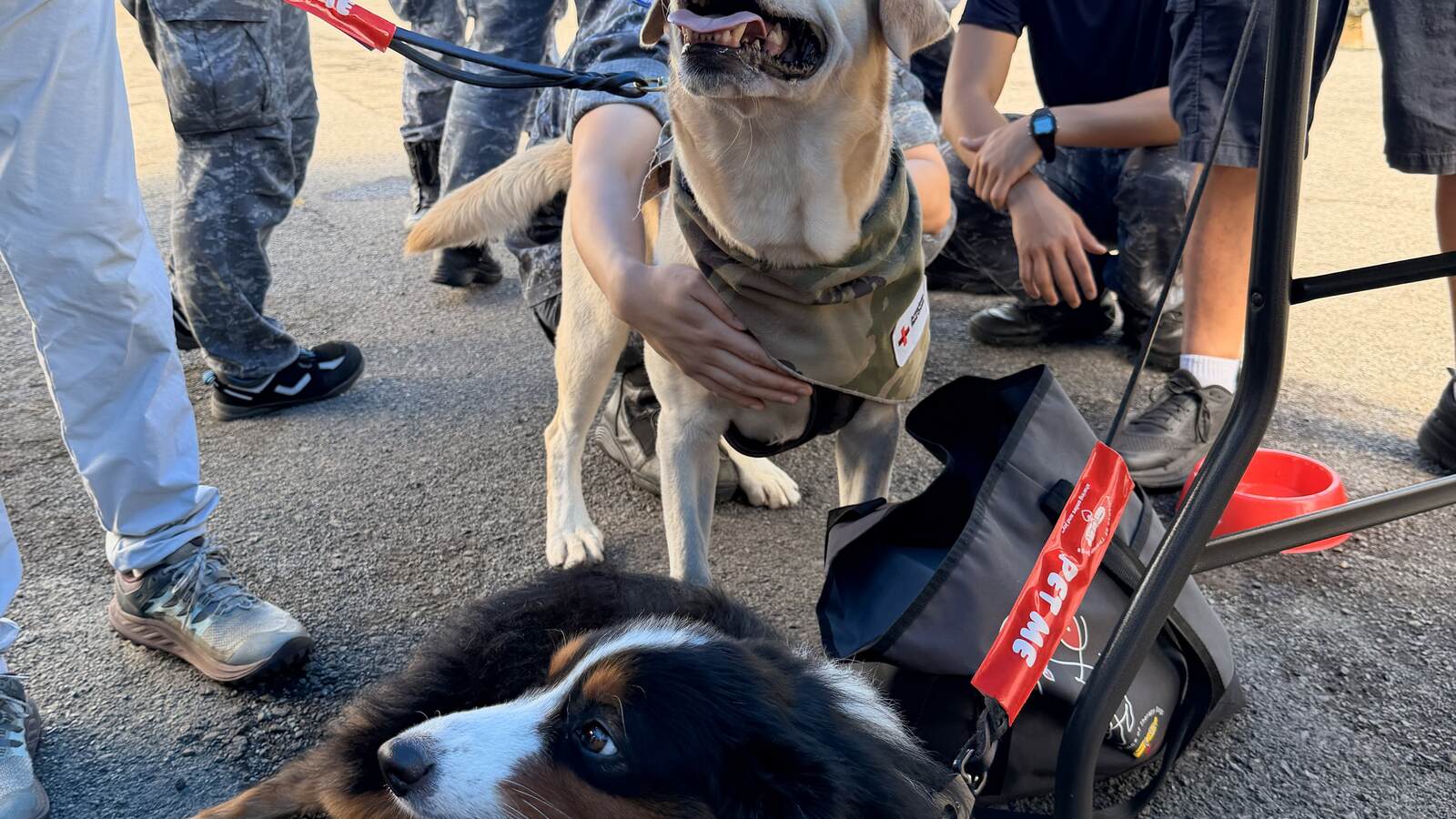
American Red Cross Therapy Dogs Maverick (front) ad Oscar (back)
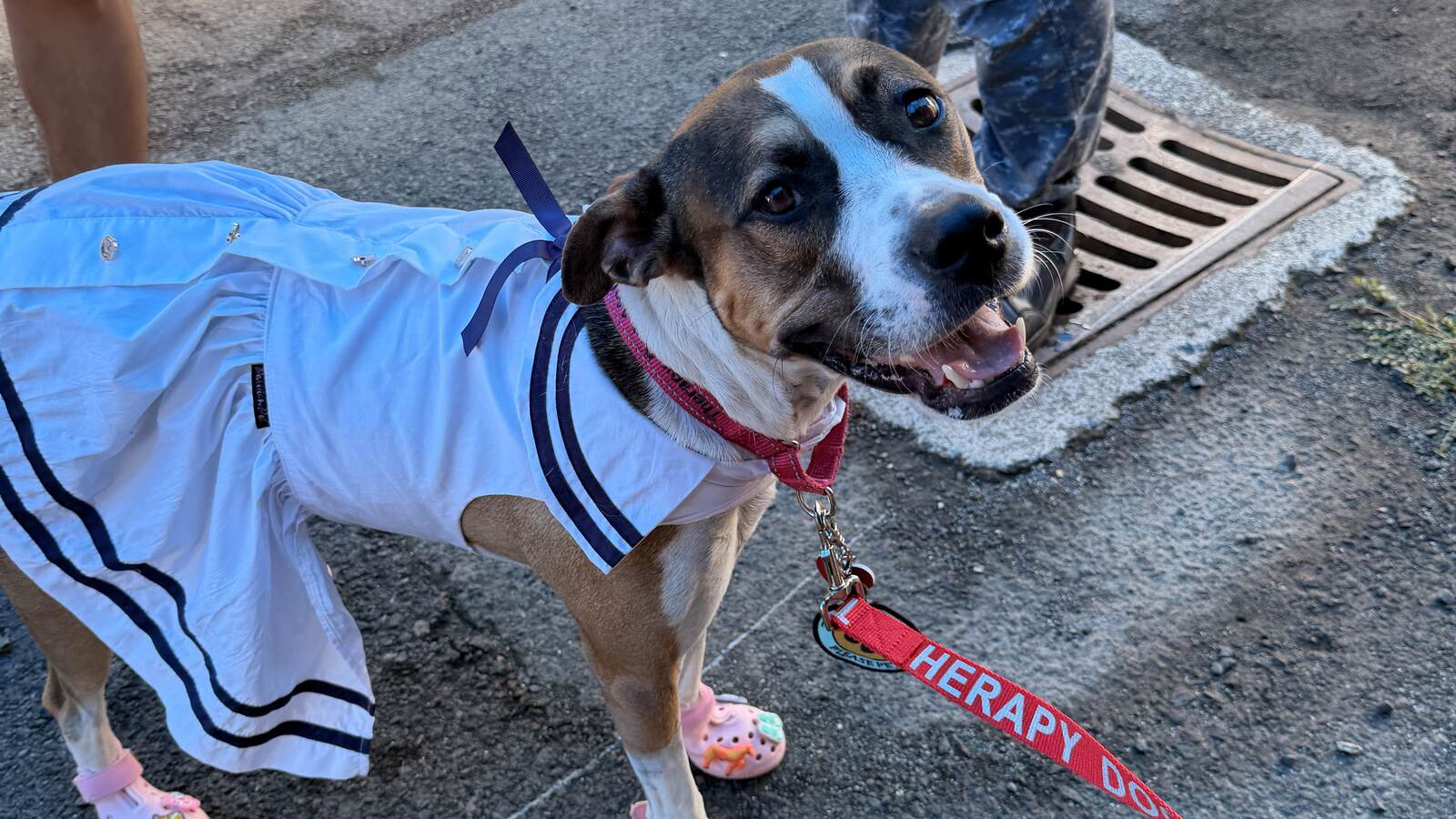
American Red Cross Therapy Dog Molly dressed in a Navy Sailor dress
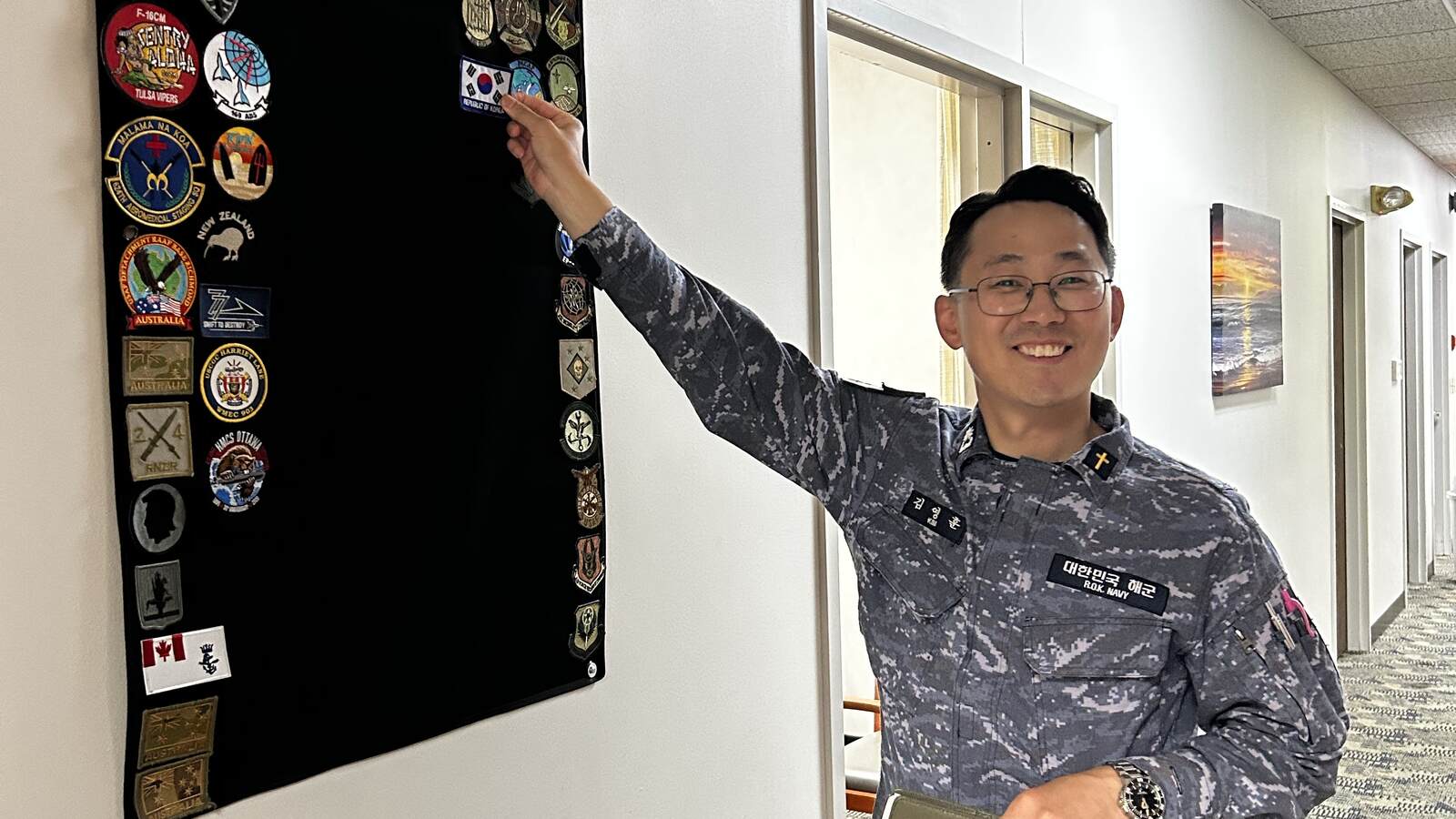
Republic of Korea Chaplain placing a patch on our wall of patches at USO Pearl Harbor-Hickam
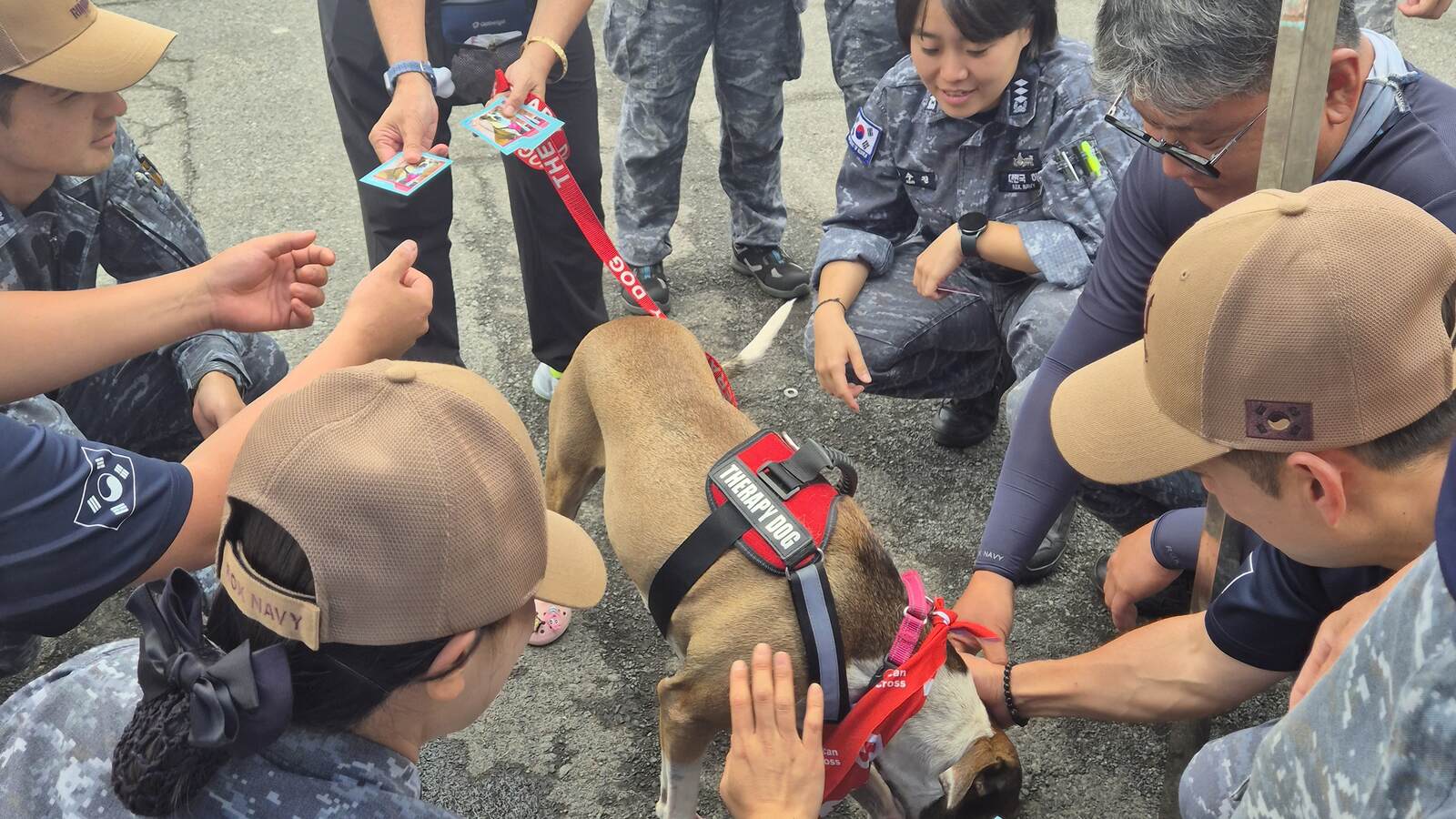
American Red Cross Volunteer Julie and her therapy dog Molly spending time with Republic of Korea sailors
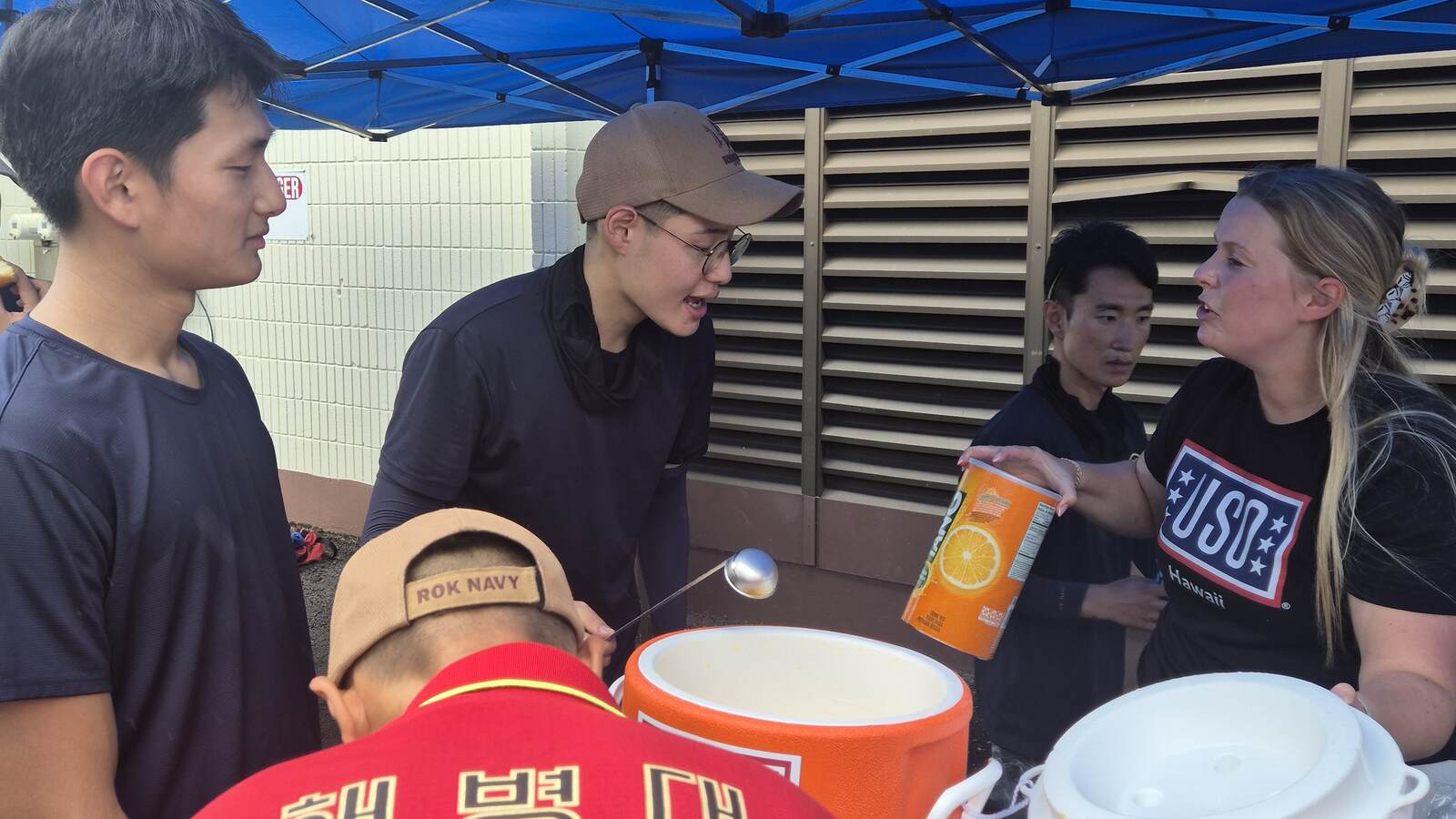
(on right) USO Hawaii Area Operations Specialist Kristine chou showing a powdered drink mix to a Korean sailor
Thirty nations. More than 30,000 military personnel. Dozens of ships, submarines, aircraft and land forces operating across and around the Hawaiian Islands.
That is Exercise Rim of the Pacific, better known as RIMPAC, the world’s largest combined and joint maritime exercise. Every two years, forces from across the Pacific and beyond come together in Hawai'i to train, operate and build the relationships needed to work alongside one another. RIMPAC 2026, the 30th iteration of the exercise, took place from June 24 through July 31 and brought together 30 nations, 30 surface ships, five submarines, 15 national land forces and more than 190 aircraft. The exercise series began in 1971 and has grown into one of the most significant demonstrations of multinational military cooperation in the world.
But an exercise of this scale is about more than ships, aircraft and operational objectives. Behind every watch station, command center and flight line are people working long hours, often far from their families and home countries. During RIMPAC 2026, maintaining morale became an important part of supporting the force.
Sometimes, that support came in the form of a box of pastries. Sometimes, it came with four paws and a wagging tail. And, unexpectedly, those small moments created connections that extended far beyond the exercise itself.
This year marked the first time the United Service Organizations played a key role in supporting warfighters participating in RIMPAC. What began with a simple conversation between a USO employee working as a reserve Navy Religious Program Specialist and another USO staff member grew into a series of partnerships involving the USO, American Red Cross, local businesses and multinational chaplains.
One side of this story is told from the perspective of Parker Kalasek, a USO Center Operations Coordinator and Religious Program Specialist First Class in the United States Navy Reserve. The other is told by Kristine Schou, a USO Area Operations Specialist who helped coordinate support efforts throughout the exercise.
From Parker:
RIMPAC 2026 was the second RIMPAC exercise I have participated in. As a Religious Program Specialist, my primary role is supporting Navy chaplains and the Religious Affairs Working Group in providing religious services, advising commanders, and caring for service members. A significant part of that mission involves what we call “deck plate ministry,” where chaplains walk among the crew, listening to concerns and providing support where it is needed most.
During the opening weeks of RIMPAC, the Religious Affairs Working Group began noticing fatigue setting in among many participants. With representatives from 30 nations working together, including many for whom English is not a primary language, the demands and stress of the exercise became increasingly apparent. Lieutenant Commander Young Kim, a Republic of Korea Navy chaplain, asked me to help coordinate morale support initiatives for the watch standers supporting the exercise. My first thought was to reach out to the USO.
As a USO employee, I knew what was possible when an organization dedicated to serving those who serve is presented with a clear need and an opportunity to make a difference. Knowing no one had yet connected the exercise staff with the USO, I decided to help open that door.
I met with Kristine Schou, a USO Area Operations Specialist whom I had met only a week earlier. I explained our concerns and asked whether the USO could provide support. Kristine immediately began identifying ways to help, providing dozens of boxes of pastries to boost morale among service members working long hours in demanding conditions.
What I expected to be an initial planning meeting quickly evolved into something much more. Alongside three chaplains, I visited each watch floor, personally delivering the pastries to watch standers throughout the facility. More than 250 watch standers received the treats, and the response was immediate. Smiles appeared across the watch floors, providing a brief but meaningful break from the intensity of the exercise.
The next phase of our effort involved partnering with the American Red Cross to bring therapy dogs to the watch floors. On July 22, Kristine, two American Red Cross volunteers, and therapy dogs Lani and Makana visited the K. Mark Takai Pacific Warfighting Center. The impact was immediate. Service members from across the participating nations stepped away from their workstations to spend time with the dogs, enjoy refreshments, and connect with one another. Kristine and the team distributed snacks and pastries, many of which were new experiences for some of the international participants.
For the next hour, the atmosphere shifted. Laughter replaced stress, conversations moved away from operational demands, and service members were reminded of the importance of taking a moment to recharge. It was during this event that I witnessed firsthand the unique impact the USO can have on the warfighter experience.
The visit gave me a renewed sense of purpose, both in my military service and in my role with the USO. It was the happiest I had seen many of those watch standers during the exercise. Most had been away from friends and family for extended periods to support RIMPAC. That brief human connection became one of the most memorable moments of the exercise for me.
While my involvement with RIMPAC concluded before the exercise ended, the impact of these efforts remained evident. The support provided by the USO left a lasting impression not only on the participating service members, but also on the chaplains who witnessed firsthand the organization’s ability to enhance morale and strengthen community.
Before my departure, LCDR Kim informed me that one of the Republic of Korea Navy ships would soon return to port and expressed interest in partnering with the USO to support its crew after their demanding months at sea. I later learned that the crew of ROKS Cheong Ja Bong enjoyed a memorable experience made possible through the efforts of Kristine and the dedicated USO volunteers. That, however, is a story best told by Kristine herself.
From Kristine:
When Parker first came to our USO area office, he took time out of his busy day serving in the Navy to tell me about what was going on at the Pacific Warfighting Center. He explained that the watch standers were working long hours and that the chaplains were looking for a way to give them a little morale boost.
I told him we would see what we could do and asked him to send me an email with some preferred dates.
What Parker didn’t know was that I was already pretty tied up that week. I had several Marine homecomings going on, along with two other events I needed to support. My schedule was packed, and our budget was pretty limited. I wanted to help, but at that point I wasn’t exactly sure how we were going to make it happen.
Then things just seemed to fall into place.
A local small business reached out to the USO wanting to donate care package items for service members who were deploying. Around the same time, we received substantial donations from Costco and Cookie Corner. Those donations gave us enough supplies to put together the visit to the Pacific Warfighting Center.
Then the American Red Cross was able to secure two therapy dog teams to come with us.
It was one of those situations where everything seemed to come together at just the right time. I didn’t have it all planned out from the beginning. We just had people and organizations willing to help, and somehow the pieces came together.
When we arrived at the K. Mark Takai Pacific Warfighting Center, the response to the dogs was immediate. Service members stepped away from their workstations to spend some time with Lani and Makana, grab some snacks and just take a break.
There were people from countries all over the world working in the building, and it didn’t seem to matter where anyone was from. Everyone knew what to do when they saw a therapy dog. They smiled, reached down to pet them and started talking.
For a little while, the watch floors felt different. People were laughing and talking about their own dogs, their families and life back home. It was a simple thing, but it gave people a chance to step away from the work and enjoy a few minutes together.
During the event, we also invited chaplains from several different countries to come to our USO Pearl Harbor-Hickam location. I gave them a briefing on the USO, what we do and the different ways we can support service members and their families.
Everyone took my business card before they left.
At the time, I didn’t think much of it. I was just glad we had the opportunity to meet them and explain what the USO could do.
About a week later, Lieutenant Commander Young Kim, the Republic of Korea Navy chaplain, reached out to me.
He explained that the ROKS Cheong Ja Bong had unexpectedly returned to Pearl Harbor because of a situation we weren’t aware of, and the sailors were not being given liberty off the port. He was looking for a way to give the crew some time to relax and boost their morale. That business card suddenly became pretty important.
The USO was able to go back to the ship with another sizeable donation from Costco. The American Red Cross also brought three therapy dogs: Molly, Oscar and Maverick.
We brought snacks, played cornhole, listened to music and spent time with the sailors and Marines.
When I arrived, they definitely needed a morale boost, and they were very happy to see us.
The dogs were a huge hit.
Sailors gathered around Molly, Oscar and Maverick, and before long people were taking selfies with the dogs and with me. There was a lot of smiling and laughing, and for a while the focus wasn’t on whatever had brought the ship back to Pearl Harbor. It was just about having a good time and getting a chance to relax.
For me, that was really what the USO is about.
We don’t always know exactly what someone needs when we walk into a situation. Sometimes it’s a care package. Sometimes it’s a snack and a conversation. Sometimes it’s a therapy dog. And sometimes it’s just showing up and letting a service member know that someone is thinking about them.
Looking back, what I remember most is how naturally everything came together. Parker came to the USO because he saw a need. I told him we would see what we could do, even though I had no idea at that moment how we were going to make it happen.
Then the local small business reached out. Costco and Cookie Corner provided support. The American Red Cross found the therapy dogs. The chaplains came to our office, and we exchanged contact information. That connection allowed us to support a group of sailors and Marines who unexpectedly found themselves back in Pearl Harbor and unable to go ashore.
None of us planned all of that.
We just had people willing to help when the opportunity came up. And sometimes, that’s how the USO works best. One person sees a need, another person says, “Let me see what I can do,” and then a whole community comes together to take care of the people who serve.
The Impact Beyond Hawai’i
The significance of those moments became even clearer after RIMPAC ended.
After returning safely to South Korea, LCDR Kim wrote to express his gratitude for the support provided to the ship and its sailors. During the crew’s long journey home, he said, many of the sailors, including the commanding officer, and command master chief continued to talk about the USO’s hospitality and the morale support they had received.
For the USO, that response was a reminder that morale support does not have to be complicated to be meaningful.
A box of pastries can provide a much-needed break in the middle of a long watch.
A therapy dog can turn a room full of tired service members into a place filled with laughter.
A game of cornhole, some music and snacks can give sailors far from home a few hours that feel a little more normal.
And sometimes, a business card exchanged during an informal meeting can become the connection that allows help to reach a ship unexpectedly back in port.
A Canadian military member who observed the RIMPAC morale efforts noted that supporting the force is not limited to religious services or formal counseling. Sometimes it means finding creative ways to help people pause, reconnect, laugh, share a story and recharge before returning to the mission.
That may be the lasting lesson of the USO’s first major involvement in RIMPAC.
The exercise itself is designed to build interoperability between nations. But during a demanding month in Hawai'i, the people supporting the exercise discovered another kind of interoperability, one that required no common language, no shared uniform and no operational briefing.
It looked like three therapy dogs named Molly, Oscar and Maverick. It sounded like laughter.
It tasted like pastries and snacks.
And it felt like someone, even thousands of miles from home, had taken a moment to say: We see you. We appreciate you.
What began with Parker walking into a USO office and advocating for help became a chain of unexpected partnerships between the USO, military chaplains, the American Red Cross and generous local businesses.
None of it was planned from the beginning.
Each organization simply responded when an opportunity appeared. And together, those individual efforts created something larger than any one organization could have done alone.
For the thousands of service members who participated in RIMPAC 2026, the mission was about training, cooperation and preparing to operate together.
For a few hours along the way, it was also about remembering the people behind the mission.
More from USO
-
From Bank To USO: Welcome to Pearl Harbor-Hickam's Newest Gathering Place
If you had walked into this building just a few months ago, you would have found a bank full of 1990s-style cubicles, file cabinets, and fl…
-
Meeting Vicki, USO PTA's Unsung Hero
If you’ve spent more than five minutes at USO Pohakuloa Training Area, chances are you’ve met Victoria Genna—though she’ll quickly tell you…
-
Staff Spotlight: Celebrating Maddy’s 1-Year Workaversary!
This month, we’re celebrating Madeline “Maddy”, who recently marked her first anniversary with USO Hawaiʻi! Originally from Fort Campbell, …